

HubSpot Review (2026): Is It the Right CRM & Marketing Platform for Your Business?
Looking for a powerful CRM and business growth platform in 2026? Our HubSpot review covers features, pricing, marketing tools, ecommerce integrations, pros & cons, and who it’s best for — from solo entrepreneurs to growing teams.
REVIEW
2/27/20263 min read
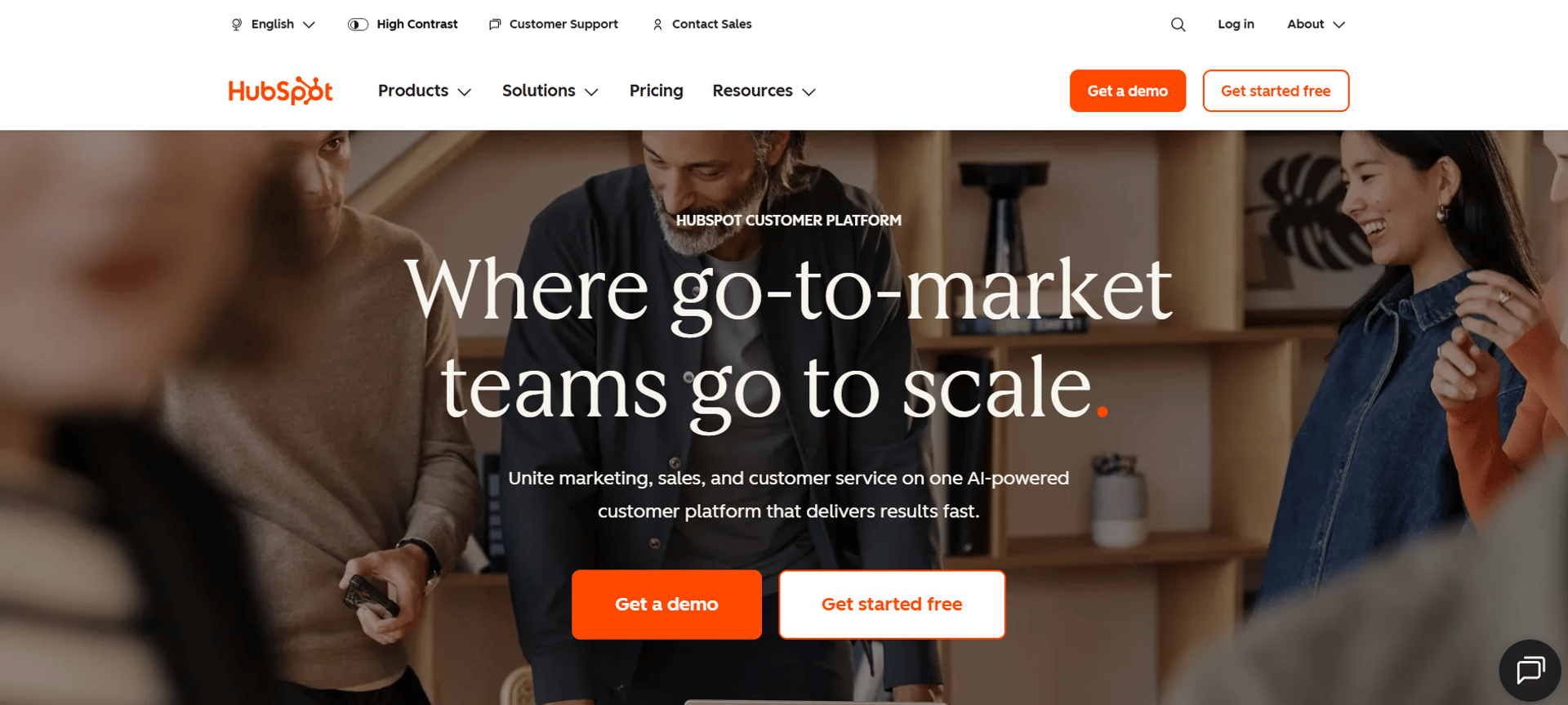
HubSpot remains one of the most talked‑about software platforms for managing customer relationships, marketing automation, and business growth especially for small and mid‑sized companies. Its all‑in‑one ecosystem combines CRM, email marketing, sales automation, customer service, content tools, and analytics into a unified suite.
But here’s the key question:
Is HubSpot in 2026 still the right choice for your business from solo entrepreneurs and startups to growing ecommerce brands and sales teams?
By the end, you’ll know whether HubSpot deserves a spot in your tech stack.
HubSpot is a leading CRM and marketing platform, rated 4.4/5 on G2 and 4.5/5 on Capterra. Users highlight its powerful automation, ease of use, and value for marketing and sales teams.
Continue reading for in-depth review, plus helpful comparisons with other leading ecommerce solutions.
At its core, HubSpot is a CRM designed to help businesses manage contacts, track sales pipelines, automate marketing workflows, and improve customer engagement all from one dashboard. What sets it apart is the integration between sales, marketing, and service tools that lets teams share data and insights without switching platforms.
Key Features
Contact & deal management with pipeline visualization
Email marketing and automation
Sales sequences, tasks & tracking
Live chat and meeting scheduling
Dashboards & reporting
AI‑powered tools for analytics and content
Large ecosystem of integrations (Slack, Shopify, Gmail, Zoom, etc.)
HubSpot’s free CRM plan is one of its biggest draws offering essential tools with unlimited users and generous contact limits. This makes it genuinely useful for startups and solopreneurs testing CRM workflows without upfront investment.
However, like many enterprise‑grade platforms, the full power of HubSpot really shows only once you move beyond the free tier and into paid “Hubs” bundled modules for Marketing, Sales, Service, CMS, and Operations that unlock automation, reporting, and advanced features.
HubSpot CRM & Marketing: What You Get
How HubSpot Works for Ecommerce & Marketing
HubSpot itself isn’t an ecommerce platform but it integrates strongly with ecommerce systems like Shopify, WooCommerce, BigCommerce, and more to sync customer data, automate email flows, and track buyer behavior.
For businesses focused on online sales:
You can capture leads from your store and nurture them with automated campaigns
Track abandoned carts and lifecycle stages
Tie customer data to CRM records for more personalized marketing
But keep in mind: HubSpot doesn’t replace a true ecommerce backend and ecommerce automation depends on how well you connect it with your store platform.
Pros and Cons of Using Hubspot
Pros:
Strong free CRM: genuinely useful, not just a teaser plan
All‑in‑one system: sales, marketing, service, and content in one place
Intuitive interface & dashboards: easy for teams to adopt
Powerful integrations: connect with Shopify, Slack, Gmail, Outlook, Zoom & more
Advanced automation & AI tools: help scale workflows and personalization
Cons:
High price jump: most advanced tools require expensive plans
Feature gating: useful automation often locked behind Pro/Enterprise
Learning curve: advanced features can take time to master
Customization limits: free/Starter plans are restrictive compared to competitors
Hubspot is Best For
✔ Small businesses that want a unified sales + marketing + service platform
✔ Solopreneurs or startups tracking leads, deals, and customer communications
✔ Growing teams that need automation and advanced reporting
✔ Businesses with multiple tools that want integrations in one place
Who Should Consider Altenatives
❌ Businesses with small budgets that don’t need full CRM automation
❌ Companies needing ultra‑custom CRM features at low cost
❌ Teams that prefer separate best‑in‑class tools instead of an all‑in‑one suite
❌ Very large enterprises with complex needs and strict pricing control
Is Hubspot Worth It in 2026?
Yes, but with conditions.
HubSpot offers one of the most complete CRM and growth platforms on the market. Its free tier alone makes it a strong contender for startups and solopreneurs who want real CRM power without upfront cost. For small to mid‑sized businesses aiming to unify sales and marketing with automation, it often delivers excellent value and efficiency.
However, if you’re budget‑conscious or just need basic features, the platform’s pricing model and feature gating can make it unnecessarily expensive compared to simpler CRMs.
In short: HubSpot is worth considering if your business is ready to grow with a powerful all‑in‑one solution — but it pays to plan your budgeting and feature needs ahead of time.
Visit www.hubspot.com
Found this useful? Drop a review or share your suggestions here, we’d love to hear from you. !!
Want to see how Hubspot comapres up against other options? Check out our Top 10 Website Builders for Beginners in 2026 to compare features, pricing, and usability before making a decision.
Try HubSpot Free — start with core CRM tools at no cost and upgrade as your needs grow.
Latest Reviews
Subscribe to our newsletter
You can unsubscribe anytime
Contact
© 2025. All rights reserved.