

WordPress Review (2026): Is It the Right Platform for Your Website, Ecommerce Store & Business?
Looking for a flexible website platform in 2026? Our WordPress review covers features, pricing, ecommerce support, dropshipping options, pros & cons, and who it’s best for — from solo entrepreneurs and bloggers to online stores and growing businesses.
REVIEW
3/1/20263 min leer
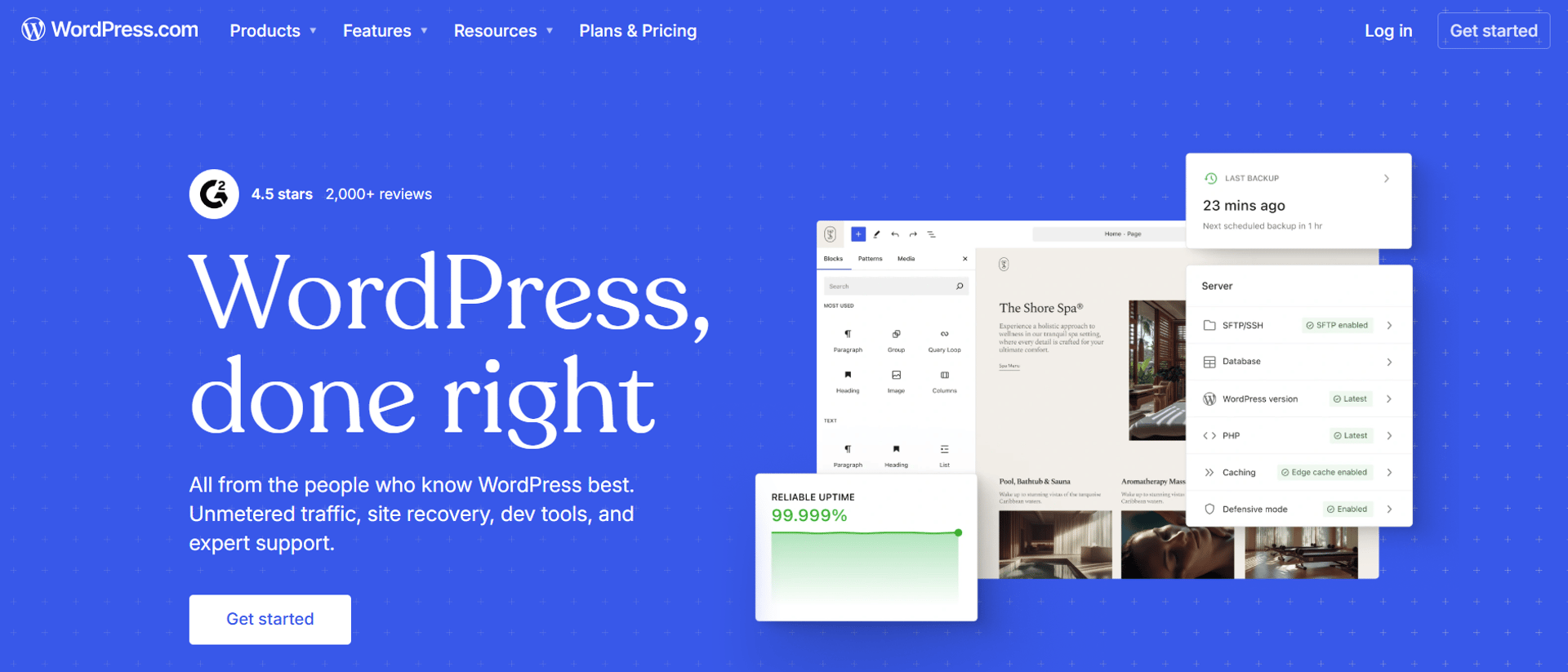
WordPress is the world’s most popular website platform, powering over 43% of all sites on the internet in 2026. Its open‑source ecosystem, limitless customization, and vast plugin library make it a top choice for bloggers, businesses, ecommerce stores, and developers alike.
But here’s the real question:
Is WordPress still the best platform for your business in 2026 — whether you’re building a blog, ecommerce store, dropshipping site, or brand presence?
By the end, you’ll clearly know whether WordPress fits your goals.
WordPress is a leading content management system, rated 4.4/5 on G2 and 4.6/5 on Capterra. Users praise its flexibility, plugin ecosystem, and suitability for websites of all sizes.
Continue reading for our in-depth Hostinger review, plus helpful comparisons with other leading ecommerce solutions.
WordPress doesn’t have ecommerce built‑in, but its most popular ecommerce solution — 🚀 WooCommerce — is arguably the most widely used ecommerce solution in the world.
With WooCommerce, you can build:
Product pages and catalogs
Shopping cart and checkout systems
Payment gateways (PayPal, Stripe, and more)
Shipping rules, tax controls, and inventory management
Product upsells, coupons, and analytics
Since WooCommerce is built on top of WordPress, you also get:
Full theme control
SEO optimization
Integration with email, CRM, and analytics tools
This means WordPress + WooCommerce can power everything from small boutique stores to complex ecommerce brands provided you pair it with the right hosting and plugins.
Note: Because WordPress is self‑hosted, your ecommerce performance depends on your hosting quality and setup so choosing good hosting (like Bluehost or Hostinger) matters.
WordPress for Ecommerce & WooCommerce
WordPress for Dropshipping
WordPress + WooCommerce can also be a strong dropshipping platform, especially with integrations such as:
AliDropship
Spocket
Printful
Syncee
These tools allow you to:
Import products automatically
Sync inventory and pricing
Automate order fulfillment
Connect with supplier networks
This makes WordPress a flexible and scalable solution for dropshipping if you’re comfortable configuring plugins and workflows. It’s less plug‑and‑play than Shopify, but gives you far more control and customization.
WordPress for Solo Entrepreneurs & Small Businesses
One of WordPress’s biggest strengths is how well it serves solo entrepreneurs, creatives, and small businesses who want:
✔ Full branding control
✔ Blogging and content marketing tools
✔ Flexible theme and plugin choices
✔ Growth‑ready platform that scales with you
Unlike more restricted site builders, WordPress doesn’t tie you to specific templates or layouts you can change design, structure, and functionality completely. This makes it perfect for:
Personal brand sites
Service business sites
Membership communities
Content‑driven businesses
However, this flexibility comes with a small learning curve. It’s not as simple as drag‑and‑drop builders but once you grasp the basics, you gain long‑term control and freedom.
Pros and Cons of Using Wordpress
Pros:
Unmatched flexibility and control
Huge plugin ecosystem for every feature imaginable
SEO power and content management excellence
Can support everything from simple blogs to complex ecommerce
Large community support and resources
Cons:
Slightly steeper learning curve for beginners
Requires hosting & setup (not all‑in‑one)
Performance depends on hosting & optimization
Security responsibility falls on the site owner
Who Wordpress is Best For
✔ Bloggers and content creators
✔ Small business owners who want full control
✔ Ecommerce and dropshipping brands that want customization
✔ Solo entrepreneurs building long‑term scalable sites
Who Should Consider Altenatives
❌ Absolute beginners who want plug‑and‑play simplicity
❌ Users who want no hosting or setup responsibility
❌ Projects that require real simplicity and minimal maintenance
Is Wordpress Worth It in 2026?
Absolutely — yes, if your priority is flexibility, control, and growth potential.
WordPress remains one of the most powerful platforms for websites, blogs, and ecommerce in 2026. Whether you’re a solo entrepreneur, a content‑focused creator, or an ecommerce business owner, WordPress gives you the tools and freedom to build exactly what you need without being locked into a specific ecosystem.
It isn’t the easiest starting point but the long‑term value, customization, and scalability are hard to beat.
In short: WordPress is worth it in 2026 for anyone who wants control, flexibility, and unlimited growth potential.
Visit www.wordpress.com
Found this useful? Drop a review or share your suggestions here, we’d love to hear from you. !!
Check out how Wordpress stacks up against other options? Check out our Top 10 Website Builders for Beginners in 2026 to compare features, pricing, and usability before making a decision.
Start with WordPress Today — pair it with reliable hosting and explore the plugins that match your goals.
Latest Reviews
Subscribe to our newsletter
You can unsubscribe anytime
Contact
© 2025. All rights reserved.